
Personalized Precision Healthcare - part 2 - Your Phenotype
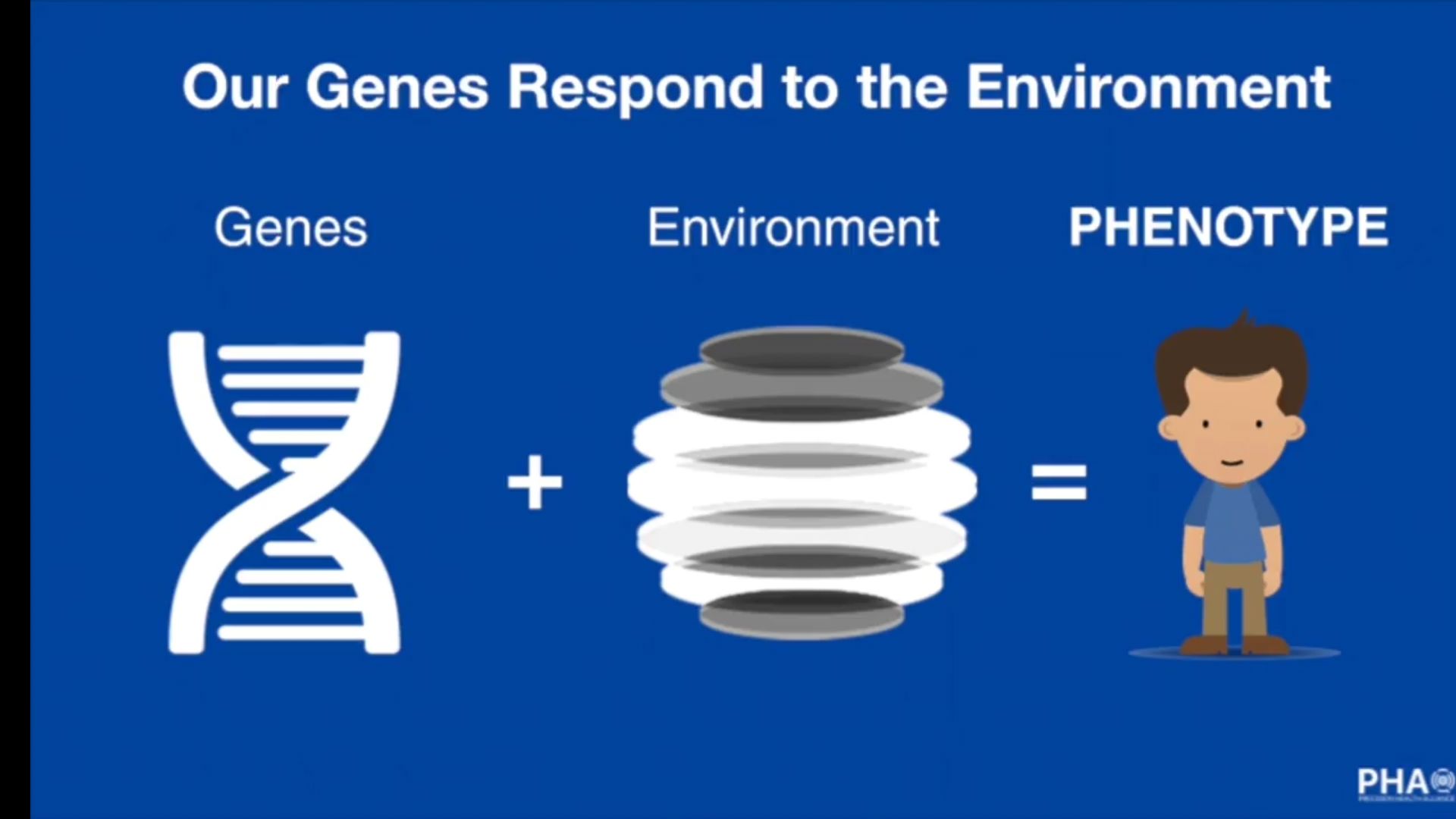
PHENOTYPE: The science of what makes you YOU
I have to admit, I was never a very 'sciency' person at school.
I remember lessons were divided into 'biology' (which I enjoyed and was quite good at) and 'chemistry' (which I found really hard).
It didn't help that the chemistry teacher favoured the real 'brainy' people in the class, ignoring students like myself who just couldn't get to grips with formulas and numbers. So I fell behind and lost interest in chemistry, and eventually gave it up.
I mention this so you know I'm not an expert when it comes to what I am about to share, and I'm still on a learning curve myself.
However, in terms of understanding personalized Precision Healthcare, it's really important to understand some of these concepts, and actually quite fascinating when one gets a handle on them.
What makes a person different?
As mentioned previously in part 1, we are all unique, and respond differently to what happens to us in our life, all of us creating our own unique illnesses and symptom-sets according to our own individuality, which is why there can be no 'one-size-fits-all' answer for any person's health problems.
In 'sciency' terms, factors which contribute to each person's unique biology include:
- genetics
- epigenetics
- embryology
- endocrinology
- and more
Very importantly one of the aspects which makes us unique is known as our 'phenotype'.
In simple terms, genetics interacting with (or responding to) the environment creates our personal phenotype.
So our phenotype is our personal biology - how our body is manifesting itself physically, mentally, emotionally, energetically - as a result of how our genes our responding to the environment.
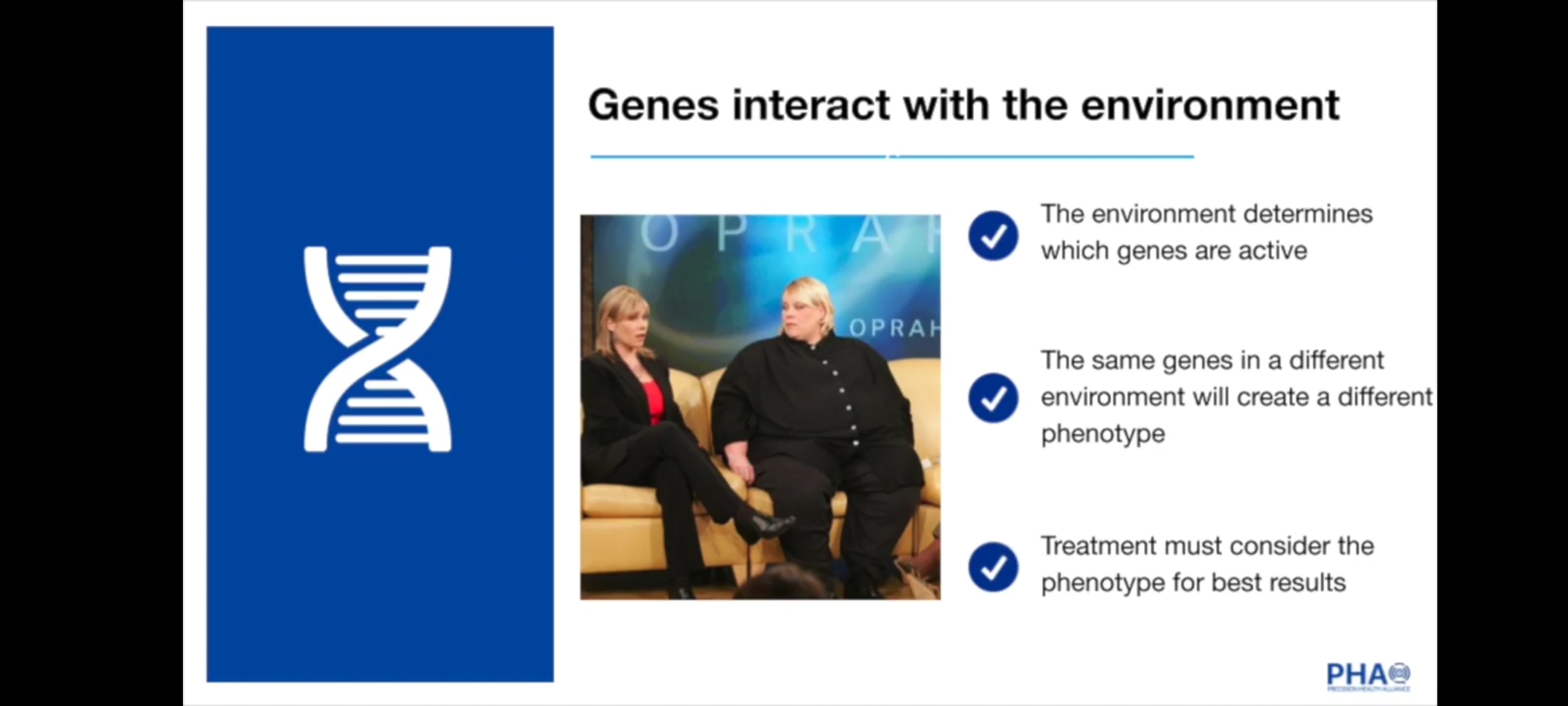
Key concepts to think of are:
- Our genetic code is literally changing moment to moment, according to how we respond internally to our environment.
- Our personal phenotype is how our body expresses itself as a result of everything going on in our life, past, present (and even futuristically in our mind)
- Everything that can be seen, measured, or tested in the body—with the exception of DNA itself—is considered part of the phenotype. This includes physical structures, physiological markers, biochemical activity, and even thoughts.
The DNA strand measurement alone represents the genotype. All other expressions of health and function are phenotypical.
- DNA thread holds our genetic material, and DNA and chromosomes change according to how we respond internally to our internal and external environment (more on this in a moment)
- DNA contains genes which are turned on or off according to environment, and this leads to our own unique phenotype
- A phenotype is the expression of our genes - genes can be changed by anything in our external or internal environment
- In terms of healthcare, each person needs the right treatment at the right time for their particular genetic expression (phenotype)
Epigenetics
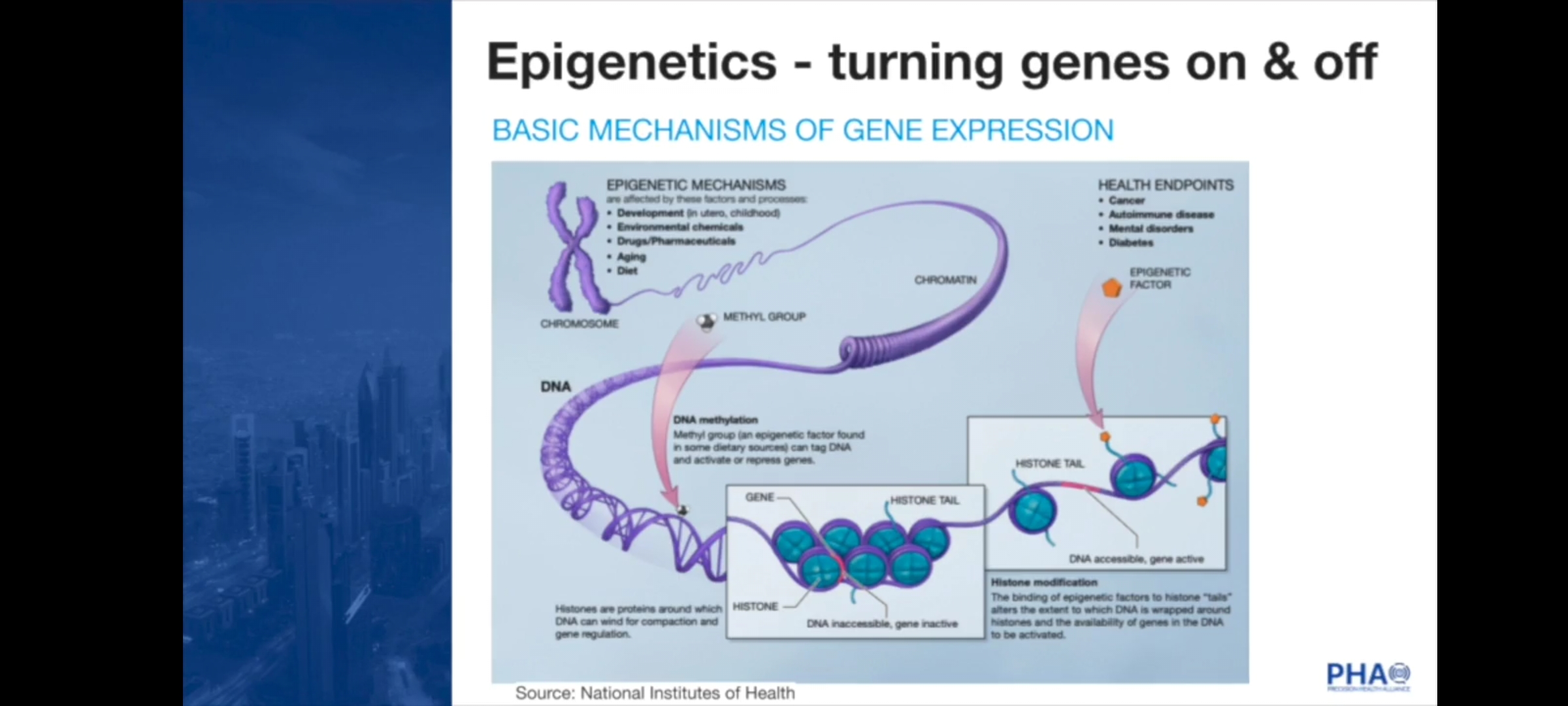
To dig a little deeper, to understand phenotypes we need to understand epigenetics.
The science of epigenetics was predominantly first brought to the world's attention by Bruce Lipton in his book 'The Biology of Belief', published in 2005.
(Cool memory, I met Bruce at a conference we were speaking at back in 2015, what a nice guy, and he gives the best bear hugs)...
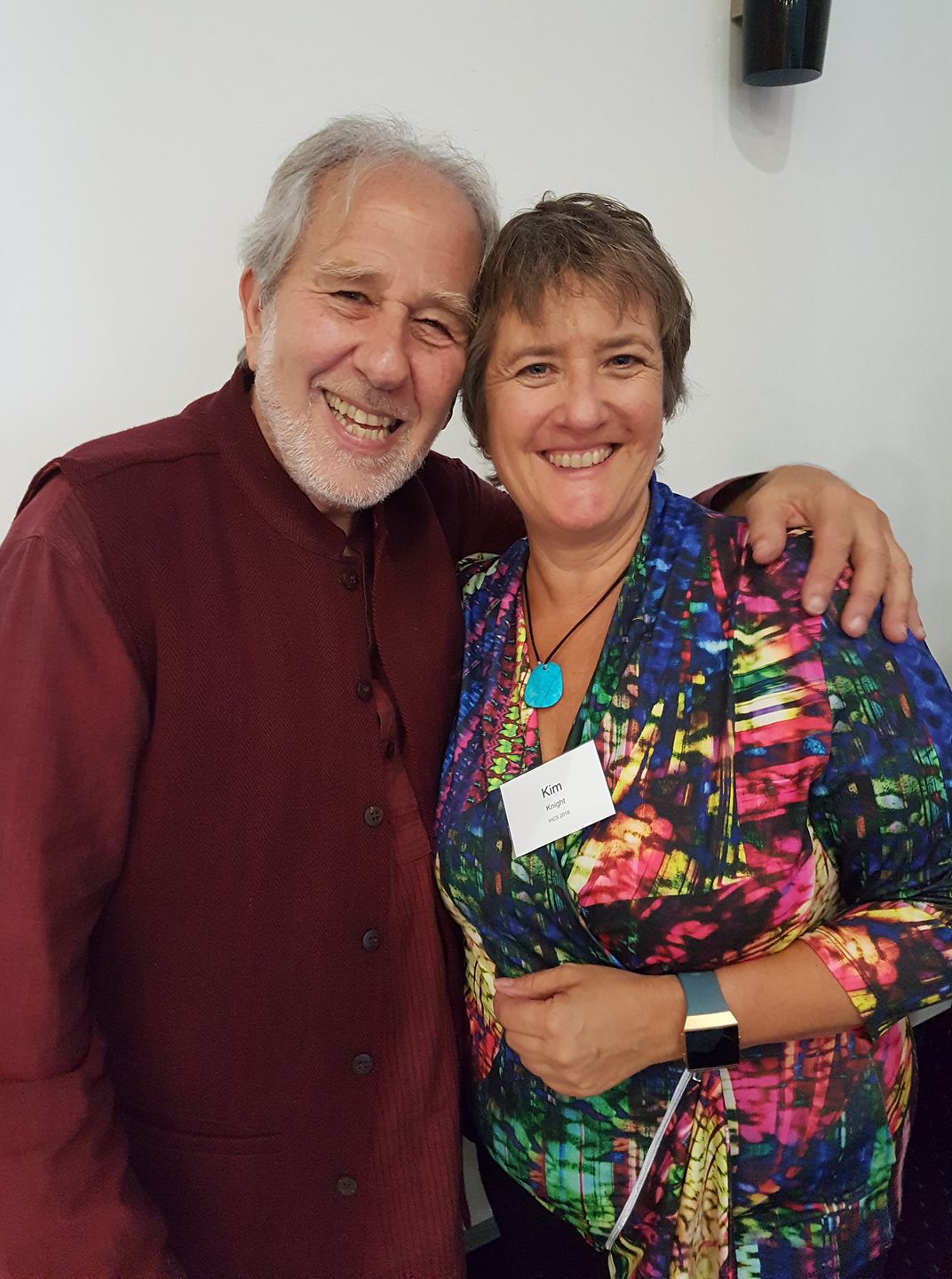
I digress... back on track...
Rather than genes being 'set' and 'unchangeable' as had been previously believed and taught, Bruce Lipton's in-depth research showed how genes change according to how we respond to what is going on in our environment, (aka, our life).
So the science of 'epigenetics' is what happens beyond ('epi') our genes: how different genes are expressed (turned on or off) according to our responses to our environment.
What is the environment?
This brings us then to ask the question, what is the 'environment'?
On the surface, we may think it is just quite literally the space outside our body.
But environment is oh so much more than this.
Yes, it does include our literal physical environment, such as where we live, work, spend our time, including our indoor and outdoor spaces.
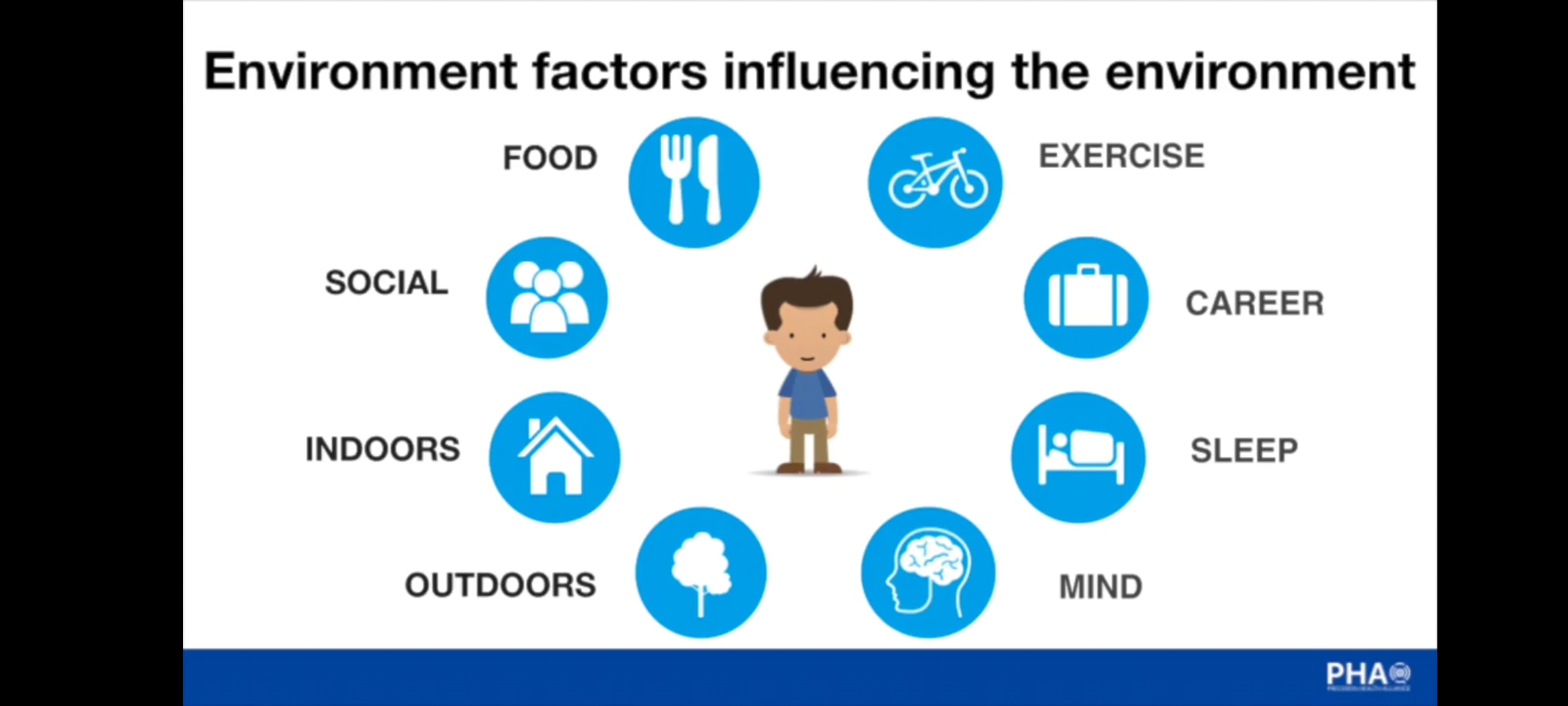
But when we're talking about the environment in terms of epigenetics and phenotype, there is much more that needs to be taken into account:
Our 'environment' is everything in our life, and I mean everything, both in and outside our body, including:
- what food and drink we ingest, including healthy and toxic substances, which change our body biology and chemistry
- what other substances including medications, supplements we put into our bodies, which all have their physical and mental effects
- what movement or exercise we give our body, which change our physiology, biology and chemistry
- our social situation - family, friends, partner, work...
- our mental state, including beliefs, thought patterns, cultural conditioning, memories, positive or negative attitudes...
- our emotional state, including emotional responses, emotional patterning, emotional habits ...
- what traumas and stresses we have experienced in the past or are experiencing currently, which are stored at a cellular level, which are still having their effects biologically, mentally, emotionally, energetically, usually unconsciously...
- our sleep habits and rhythms, and how these are affecting us physically, mentally, emotionally...
- and more...
Put simply, everything in our life is our environment and is constantly contributing to the creation of our ever-changing phenotype.
In summary our phenotype - how our body is manifesting - is the result of our gene expression, which is the result of how we've been responding physically, mentally, emotionally, energetically to our life.
Anything we can measure outside of the DNA is a phenotype. In particular, chronic stress creates a phenotype which is dysfunctional for good health.
But, (in the words of Suzanne Paul), there's more...
There's something underpinning the phenotype and epigenetics which we need to look at in order to understand our own uniqueness, and how this relates to Precision Healthcare, which is all about taking into account our own uniqueness so we can manage our specific health needs.
And this something is the very fascinating topic of embryology - how we are formed in the womb.
How we grow in the womb determines our own unique phenotype and HealthType™.
This will be the topic of part 3...
Want to discover your HealthType™? Join the June 2026 5 Day Challenge
